
I lost my dad six years ago.
I still have days where it feels like yesterday.
That’s the thing about grief that nobody really prepares you for. You expect it to get easier in a linear way, like a wound that steadily heals. And in some ways it does. But it also just becomes something you carry with you, and every once in a while something catches you completely off guard and you’re right back at the beginning.
I’m sharing this because I know I’m not the only one who has tried to figure out how to hold grief and professional responsibility at the same time. If you’re navigating that right now, or trying to support someone on your team who is, I hope something here helps.
The Workplace Wasn’t Built for This
Here’s an uncomfortable truth: most workplaces are genuinely not equipped to handle grief well. Only 1 in 5 companies offer more than 5 days of bereavement leave, even though grief experts recommend closer to 20 days after losing a close family member. Five days to absorb one of the most significant things that will ever happen to you, handle logistics, support other family members, and somehow be ready to return to meetings and deadlines.
That gap between what people need and what they’re given is where a lot of professionals silently struggle. Research consistently shows that bereaved employees experience reduced focus, lower productivity, and emotional difficulty for weeks and months after a loss.
The problem is that most workplace bereavement policies are built on a linear model of grief, as if it follows a tidy arc from loss to recovery. Anyone who has actually experienced it knows that’s not how it works.
The Ball in the Box
A friend shared this analogy with me when I lost my dad, and it’s still the most accurate description of grief I’ve encountered.
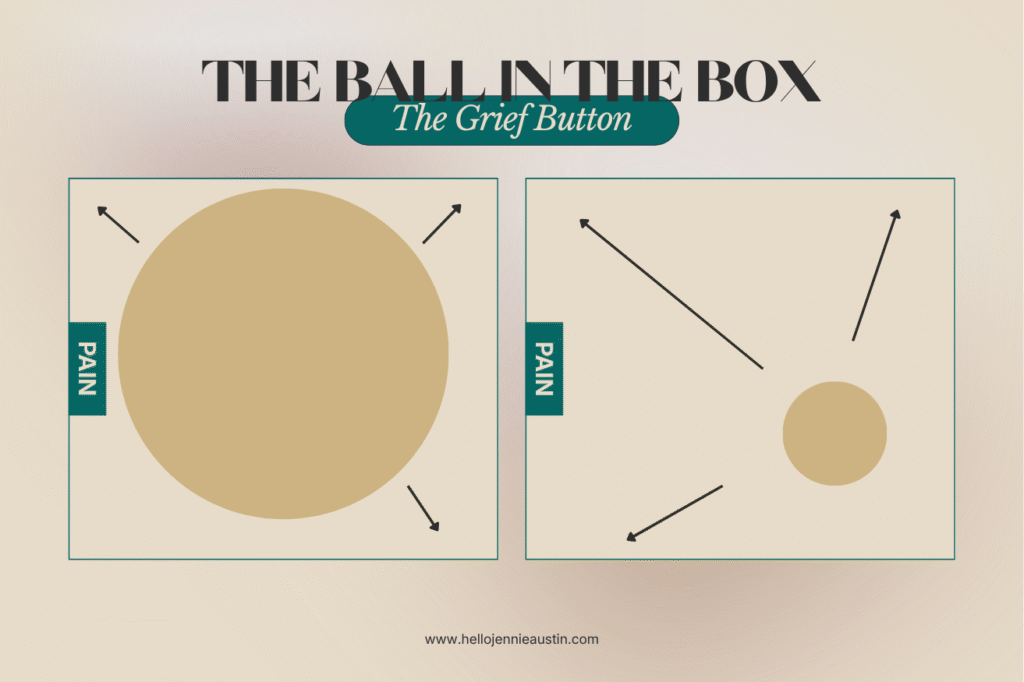
Imagine a ball in a box. Inside the box is a button that represents pain. In the beginning, the ball is enormous, filling almost the entire box, hitting the button constantly. Over time the ball gets smaller. But it never disappears. And when it does hit the button, it hurts just as much as it always did.
Six years out, my ball is smaller. But it still hits the button. A song, a random Tuesday, his birthday, a moment where I want to share a cute picture of my kids with him and then remember I can’t. The button gets hit and it hurts just as much as it did in the beginning.
What has changed is my capacity to hold it. And I think that’s what healing actually looks like.
If You’re the One Grieving
Ask for help, even if it’s hard.
I am a classic “I’ll handle it myself” person, and losing my dad forced me to get over that fast. Your colleagues want to help and genuinely don’t know how. Make it easy for them. Delegate what you can. Move back anything that doesn’t have to happen right now. Send a brief, honest note to clients letting them know what’s going on and who to reach in your absence. People will rise to meet you. Let them.
Give yourself more time than you think you need.
I took about a week and a half off. It wasn’t enough. I went back before I was ready because I felt guilty about being away, and I was not fully present for weeks after that. If you have any flexibility in your timeline, use it. Use whatever combination of bereavement leave, PTO, and flexible arrangements you can piece together, and don’t apologize for it.
Let distraction be part of the process.
Well-meaning people told me not to think about work at all. But there were moments where I really needed to focus on something else for an hour. There’s nothing wrong with that. Grief is nonlinear, and so is recovering from it. A small task, a familiar routine, a reason to get dressed and show up somewhere can be genuinely grounding. The key is balance. Let yourself take a break from taking a break sometimes.
Let yourself feel whatever you feel.
I am a crier. I have cried at work. I wish I had been more forgiving of myself about it at the time. Grief shows up however it shows up, and suppressing it is not the same as processing it. If you need to step away and take ten minutes, do it. If you need to excuse yourself from a meeting, do it. You are human first and a professional second.
Crying in front of your coworkers or employees is not a sign of weakness. It’s a sign of humanity. If you’re in a leadership position, modeling that kind of honesty does more for your team’s psychological safety than almost anything else you could do.
If You’re Leading Someone Who Is Grieving
The most important thing you can do is make it safe for them to be honest with you about where they are. Most people will minimize what they’re going through at work because they don’t want to be seen as unable to handle their responsibilities. Your job is to make it clear that you see them as a person first.
Check in beyond the first week. For most people, the hardest moments come weeks and months after the loss, when the adrenaline fades, the community disperses, and anniversaries and birthdays begin to surface. The follow-up matters more than most managers realize.
Be flexible about what “back to normal” looks like and when. Some people will want to dive into work as a distraction. Others will need a slower re-entry. Neither is wrong. Ask what would be most helpful rather than assuming.
And if your company’s bereavement policy is three days, advocate for something better. Research consistently shows that bereavement benefits matter deeply to employees when evaluating a workplace. How a company treats its people during the worst moments of their lives says everything about its culture.
What Grief Has Taught Me as a Professional
Losing my dad changed the way I think about work. Not in a dramatic overnight way, but slowly and in ways I’m still noticing.
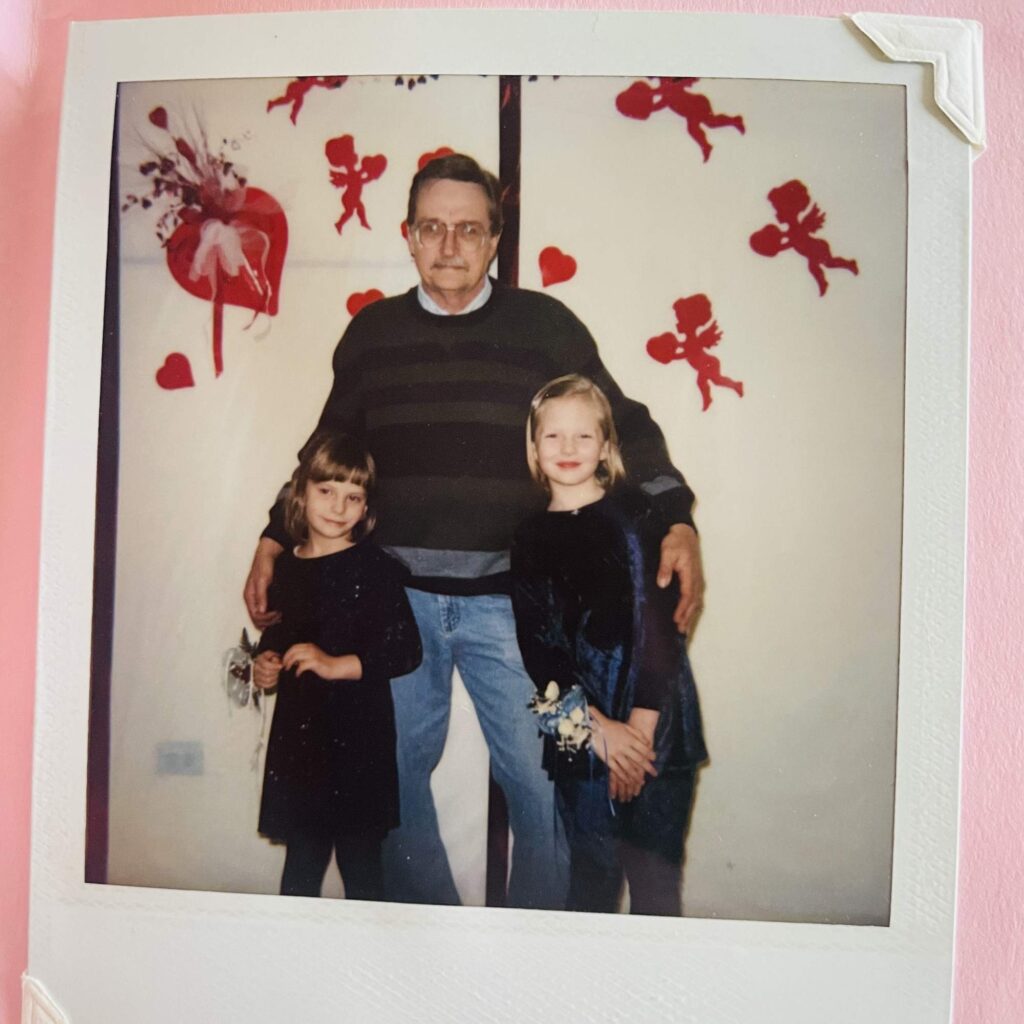
I have a lot less patience for things that don’t actually matter. I am more honest with clients and with myself about what is and isn’t working. I take time off without guilt more than I used to, because I understand now in a way I didn’t before that the time is the point.
Grief also made me a more compassionate leader, in a very practical way. When someone on my team is going through something hard, I don’t try to rush them back to normal. I try to make space for them to be human. Because I know now what it meant when someone did that for me.
You’re Not Alone in This
Whether you’re in the thick of a loss right now, months out and surprised by how much you’re still feeling it, or trying to figure out how to support someone you care about, know that there is no right way to do this.
Grief is not a problem to be solved or a process to be optimized. It’s something you move through, at your own pace, in your own way. The professional world will still be there. Take the time you need.
And if nobody has told you this yet: you’re doing better than you think.
Good ideas are just the beginning.
Let's make something real out of them together.
