

Blog
![[FREE Worksheet] Four Things to Consider Before You Rebrand Your Small Business](https://images.squarespace-cdn.com/content/v1/523cf6c4e4b0f6b279e835d3/1589475277944-EGTWFUIU470JYRC5JRVE/brand-identity.jpg)
[FREE Worksheet] Four Things to Consider Before You Rebrand Your Small Business
If you decide to rebrand your small business, it’s important to remember that all successful rebranding campaigns are more than just a new look. Before you jump in, there are a few things you should ask yourself to get the most out of rebranding and make sure you’re set up for success. Take a look at my free worksheet for rebranding small businesses to get started on the right track!

When you think of your small business’ brand or identity, what do you think of? Do you think of your name and logo? Do you think of the sign in front of your storefront or office?
In truth, your “brand” is so much more than this! Think of your brand as the personality of your business. It’s about how you relate to your customers, and how they feel about your business. It’s about how you stand out from your competition. It’s even about how your employees feel about working for your business.
A rebranding campaign is (and should be) more than just a new logo, location, or name. Although all of these things may play a role in your rebrand, there are plenty of other things to acknowledge and plan if you think you’d like to give your company a bit of a “facelift”.
Start here: Why do you want to rebrand?
There are plenty of reasons why you might be thinking about rebranding. Here are some ways your small business might benefit from a rebrand:
You’ve been in business for a long time, but sales are more recently dwindling. This is an indication that your brand could use a refresh or—as I said before—a bit of a “facelift”. This is especially true if you first opened your doors over 5 or 6 years ago. Sales may be decreasing for a number of different reasons, but one thing that can grab the attention of your target audience again is a new look and feel.
Your business has evolved and you’d like your brand to match. Is your business offering something new or different than it was when you first opened? Maybe you’ve slowly made some changes to your customer-facing processes and feel that your current branding should catch up.
You’d like to better differentiate from your competition. If you notice more potential customers choosing your competitor(s) over your business, think about why. A rebrand may help you better stand out as a better option to those potential customers.
You’re making another massive change to your business. If you’re moving locations or introducing a new product or service, a rebrand can help you make an even bigger splash with that campaign.


You’d like to reach a new audience. If you’ve already captured the attention of a particular target audience and would like to expand, a rebrand can make your business more appealing to a new type of audience, like Gen Z.
Understanding your specific reason for a rebrand will help you create a campaign that makes the most sense for your business and goals.
What are your goals?
Any successful campaign starts with setting SMART goals, because otherwise, how would you know if it was successful? You may remember me talking about SMART goals in my previous post about building a product launch campaign. If not, here is a bit of a refresher.
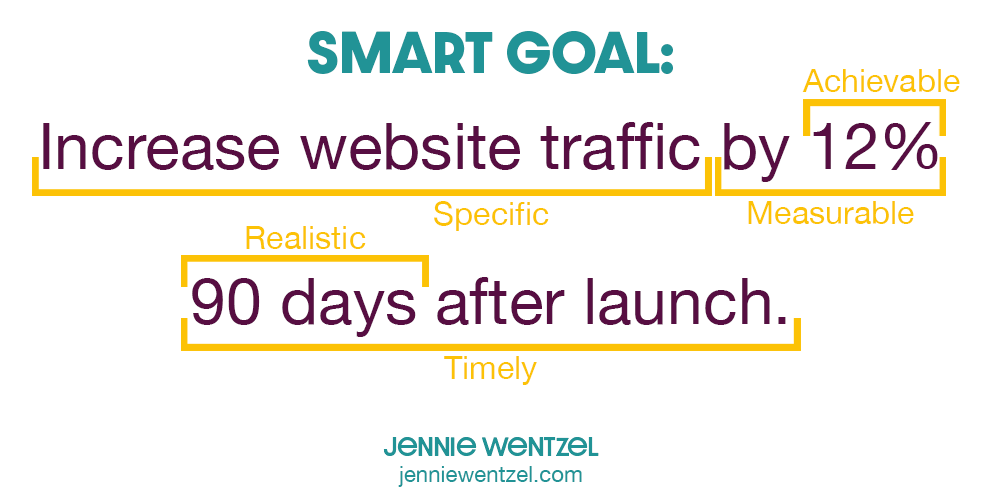
Remember why you chose to rebrand in the first place, and write down goals that are specific, measurable, achievable, realistic, and timely.
After the launch of your rebranding campaign, track the success based on these goals that you’ve written down.
How will this rebrand tie in with your mission statement?
Keep your rebranding true to your original mission and values. How will this help you accomplish the vision you had in mind when you first started on this adventure?
Moreover, if you think that your original mission has changed, make sure to identify and communicate your new mission statement to both your customers and employees.
Having a clearly communicated mission statement helps boost employee engagement. According to a report by Deloitte, 73% of employees that work at a “purpose-driven” company are engaged, compared to only 23% of employees that don’t work at a company with a clear purpose and mission.
A more engaged workforce leads to more productivity and ultimately, better customer service. It’s a win-win for everyone!

Photo by Patrik Michalicka on Unsplash
Why should your customers care?
Speaking of your customers, how will you get them bought into this rebrand? Are there other changes that will improve their experience that you can launch with your campaign? How can a new brand identity help make their lives easier? After all, the goal here should be to convert more sales and maybe even make your customers so pleased that they turn into vocal advocates for your business!
Here are some ideas to get your customers excited for your new brand identity:
Launch a new, more streamlined website that your customers can use to buy your products or book your services.
Introduce a new program that can help them save money, such as a rewards program, referral program, or a recycling program.
Start using supplies or processes that are more environmentally friendly—think recycled packaging or a “go paperless” option for statements and invoices.
Boost engagement and hype on social media by hosting a giveaway or contest related to your upcoming launch.
Remember, your rebrand is more than just a new look and feel; it should be something that truly improves the customer experience, drives employee engagement, and helps you achieve your vision for your small business.
Now that you’ve put some thought into these things, it’s time to plan and launch your rebranding campaign! I have found it’s best to collaborate with your teammates on projects like this because not only does it help them feel more bought in, you can get some great ideas and new perspectives on the direction to head in.
Take a look at my free rebranding worksheet that will help you get started on the right track.
![[FREE Checklist] Launch a New Product in Six Simple Steps](https://images.squarespace-cdn.com/content/v1/523cf6c4e4b0f6b279e835d3/1574649513302-B84OZ4IJR7T1CGBMQQIM/setting+goals.jpg)
[FREE Checklist] Launch a New Product in Six Simple Steps
When launching a new product or service to attract new customers, you don’t want to leave anything to chance. It’s important to take the proper steps in planning your launch campaign to have a clear and aligned measurement for success. Take a look at my basic product launch checklist to start things off on the right foot for your new product.
Photo by Jacqueline Kelly on Unsplash
Whether you’re a B2B service provider or develop and sell products to consumers, it’s important to have a documented plan when you have a new product or service to launch to your customer base. If you want this new product to be successful, you don’t want to leave anything to chance. This new product is an opportunity to reach more customers and delight your current ones. Take a look at my very basic step-by-step guide on how to launch a new product or service successfully.
Do your research
Find the benefit(s)
Write down goals
Make your customer the hero
Develop your plan
Execute!
Do Your Research
The first—and probably most important—step in launching your new product or feature is to perform market research. This doesn’t have to be a super intensive process. Reach out to 10 of your existing customers or prospective customers and ask a few questions about their problems and pain points as it might relate to your business. If you offer an accounting service for business owners, you will probably ask them about any issues they run into when they file their taxes. If you’re a massage therapist or chiropractor, you might ask this person about the actual pain points in their body.
Don’t forget to be specific! You have a list of questions to ask them in front of you, but if you need clarification or would like your prospect to expand on something, make sure to ask them. After all, you’re just having a conversation with them!
What you’re trying to find out is what specifically your target audience needs. If they start a sentence with “I wish I could…” or “Why can’t this do this…” make sure to write down what they say. You’ll soon understand what they’re really looking for.

Find the Benefit(s)
Now that you have an idea of your customers’ and prospects’ issues, you can find out the best way to help them with these issues. Ask yourself this: how is the product or service you’re offering going to help them solve their problems? (Psst: Notice how I said “HELP THEM solve THEIR problems”... this will help you with step 4.)
Your new product or feature may only solve one problem for your customers, and that’s okay. You just need to make sure that the problem is a big enough pain point for them to generate the right amount of excitement.
Write Down Goals
A product launch without goals could result is a misaligned vision, even if you’re a one-person team. According to Coschedule, people who set their goals are 376% more successful. It’s important to identify your goals for this launch to help shape your message and strategy. This will also help you determine success and know what works—and what doesn’t work—in communicating with your customers.
Most goals can be categorized into four main groups:
Lead generation - Finding prospects
Brand Awareness - Getting prospects to know about you
Brand Consideration - Getting prospects to consider buying from you
Sales - Getting prospects to buy from you
Additionally, make sure your goals are SMART goals. SMART stands for specific, measurable, achievable, realistic, and timely. Here is an example of a great SMART goal to break down this concept:
Most product launches focus on one specific goal, but you can have more than one. Just don’t go overboard!
Make Your Customer the Hero

Photo by Helloquence on Unsplash
A colleague of mine recently introduced me to StoryBrand Marketing, and it has honestly changed the way I develop campaign messaging ever since. It’s a paid workshop for marketers, but the basic premise is to make your customer the hero of your story. In step 2 you found out how you can HELP your customer solve THEIR problem. That’s the message you want to send!
Here is an example of a customer-focused message that I developed for one of my clients, a chiropractor in Grand Rapids, Michigan:
“Providing you with the tools to achieve total wellness.”
Think of your product as the guide that helps your customer (the hero) face a particular issue. This change in mindset better recognizes your customer’s journey to solve their problems, and ultimately creates more trust in your brand.
Develop Your Plan
You’ve got the information, the basic messaging, and the goals for success. The last step before launch is to plan your marketing campaign! What are the specific tactics and tools you will use to get the message about your product or service out there? Here are some ideas:
Email Newsletters
Social Media
Calling Campaign
Website Banner Ads
Website Blog Posts
Influencer Marketing
Event Marketing
Webinars
Where do your customers spend their time looking for information or solutions to their problems? These places are where you should focus your efforts. Set up a way to track the success of each platform or tactic you use. That way you will know for the next launch which tactics you need to invest more time and money into.
Execute the Launch
Congratulations! You’ve set yourself up for success by writing down a plan for your product launch. All that is left now is to execute your launch and monitor its success. Then, have another conversation with those prospects you spoke with in the beginning. Did your product or service solve their problem? What kind of feedback do they have for next time? Your loyal customers want to see you succeed. Ask them questions about how you can reach more people like them. They will be more than happy to help!
Are you preparing for a product launch? Download my free product launch checklist to walk you through your next big product launch today!
Hi! I’m Jennie.
Thank you for visiting my blog! I write about marketing tips for small businesses and how to succeed as a female professional. I write from experience about the things that I love.