

Blog

Six Steps to Make Email Marketing Your Small Business’s Most Powerful Tool
Email marketing has the potential to provide small businesses with the highest ROI out of all their digital marketing efforts. Building an email list takes time, but when done with the goal of creating value for subscribers, provides a high return for small businesses in any industry.

Photo by Webaroo.com.au on Unsplash
There are over 3 billion email users worldwide. There is no doubt that email is fully ingrained in both the personal and professional lives of the large majority of the US population. In fact, in a 2017 survey by Campaign Monitor, over 50% of respondents stated that they check their personal email accounts more than 10 times per day.
As a business, however, it can be daunting to think about trying to reach a captive audience using email marketing. After all, when was the last time that you opened a promotional email from another business? How many of those newsletters are sitting unopened and unread in your inbox right now?
The Six-Step Secret to Success
If you want to take your email marketing to the next level in 2020—in a time when it’s easier than ever to block out digital advertisements—it’s important to start your email marketing strategy off on the right foot. Follow these simple steps to grow your email list, and ultimately, your list of happy customers!
1. Do NOT buy an email list.
I know this isn’t technically a step in the process, but I cannot stress enough how much of a bad idea it is to buy a list of contacts to use to build your list. It may seem more efficient to do things this way, but there’s a reason that seasoned marketers cringe at the idea of buying or borrowing email lists. Here’s exactly how you could be shooting yourself in the foot with this strategy:
Your recipients’ first impression of your brand is that you’re spammy.
It skyrockets your unsubscribe rates, which could suspend your account on certain newsletter platforms.
The best emails and contacts are never for sale. It’s likely that these recipients have already been spammed by other businesses and are therefore no longer in use.


These are people that don’t know you or your brand. You can’t even be totally sure that these are real people that meet your target demographics.
If you want to see a higher ROI on your email marketing efforts, you will need to grow your email list organically. It will take time, but you’ll see open rates and click through rates that will convert more email users into valuable customers.
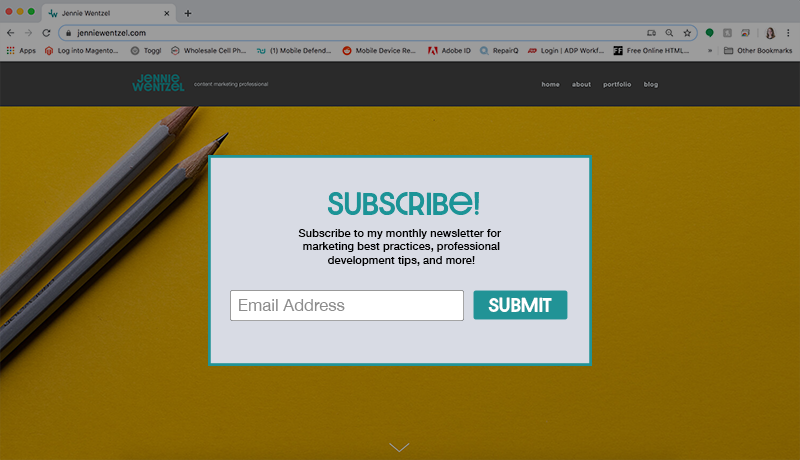
Here is an example newsletter subscription call-to-action.
2. Grab the easy subscribes first.
Start by placing a newsletter subscription box in multiple places on your website. Don’t tuck it at the bottom of your homepage; make it easy for eager potential customers to provide their contact information so you can reach them. This call-to-action, or CTA, should make it clear to users that this is where they can subscribe to your newsletter for offers, information, and important updates.

Photo by Austin Distel on Unsplash
3. Create a free offer.
Now, think of those website visitors that are less eager to fill out your form. Entice them to provide their information by creating something they may be looking for, as it relates to your products or services. If you’re a yoga teacher, for example, you can create a free step-by-step guide or video on how to practice headstands or another complicated pose. Simply ask users for their email address to view or download the guide, and watch your email list grow organically with a much more captive audience.
4. Segment your lists.
As your email lists grow, you’ll find that some subscribers are looking for different types of content. Your subscribers that signed up in a general subscription box might be more prepared to make a purchase or schedule an appointment with you. Subscribers that are captured in your free opt-in offers may need some more nurturing to develop more trust in your brand.
As you learn more about each of your subscribers and what they’re looking for, you should tailor your email content to them. One of my clients saw a 285% increase in revenue generated from emails after we switched to segmented campaigns. That number will only grow more! According to Campaign Monitor, personalized, segmented campaigns can drive up to a 760% increase in revenue.
5. Continue to send valuable content to your subscribers.
Stay at the top of your subscribers’ minds by sending them regular, relevant, and valuable content. Remember, they can unsubscribe from your emails at any time; give them a reason to stick around. For example, if your small business is a hair salon, you can do a weekly or bi-weekly newsletter series where you share quick hair care tips, product reviews, or color trend alerts to your interested subscribers. Make them glad that they handed you their email address! This ultimately creates more and more trust in your brand—the kind of trust that will not only make them want to purchase from you, but tell their friends about you too!
6. Make compliance a priority.
In 2003, an act titled Controlling the Assault of Non-Solicited Pornography And Marketing (CAN-SPAM) was passed to allow email recipients to prevent businesses from sending them unsolicited messaging. As you build out your email list, you should prioritize compliance with CAN-SPAM not only because it’s the law, but also because it’s generally good practice to follow in email marketing. Here are some guidelines to keep in mind:
Include an easy-to-find unsubscribe link at the bottom of every email you send.
Once users unsubscribe, make sure to actually remove them from your list, and don’t add them back.
Display your physical location at the bottom of your emails. This is good practice because it helps build the credibility of your brand.
According to salecycle.com, email marketing has an average return on investment (ROI) of $32 for every $1 spent. 59 percent of marketers say that this is their biggest source of ROI. By organically growing your email subscribers list using valuable and relevant content, your small business can start to see a high return on your email marketing efforts as well.
![[FREE Online Resources] Why Your Website from 2016 Needs a Redesign This Year](https://images.squarespace-cdn.com/content/v1/523cf6c4e4b0f6b279e835d3/1579473444633-I41J9LSHYBTBHJ51I8DR/website-design.jpg)
[FREE Online Resources] Why Your Website from 2016 Needs a Redesign This Year
When was the last time your small business performed a website redesign? Experts recommend that businesses redesign their website every 2-3 years to ensure usability, improve their SEO efforts, and better reach their sales goals. Check out some free tools that you can use to gain valuable insights on the health of your website.

Photo by Damian Zaleski on Unsplash
Let me start this off by saying that there is absolutely nothing wrong if you had a friend of a friend who knows something about websites design your first website for your small business in 2016. I’m a firm believer that having some sort of presence online is better than no website at all. However, if you haven’t updated your website since then, you’ll probably find that it will become more and more difficult to reach your business goals as time goes on.
Many of the experts at Ironistic recommend redesigning your website every 2-3 years. Depending on your industry, you may be able to get away with waiting a little longer between website redesigns. Regardless, it’s important to understand how crucial of a role your website plays in helping you grow your business.
What this really comes down to is trust. You want to make sure that potential customers can find the right information about your products or services online and that they feel right off the bat that they can trust your company. A recent study by Nielsen Norman Group showed that there are four main ways that websites can communicate trustworthiness in a brand: design quality, upfront disclosure, comprehensive and current content, and connection to the rest of the web. These are actually the very same principles identified way back in 1999 by Jakob Nielsen.
So if the principles of a trustworthy website have stayed the same over the past 20-plus years, why should businesses update their website every 2-3 years? The short answer is that the internet, search engines, and even consumer behaviors are constantly changing.
If you are wondering if you need a website update, here are some important questions to ask yourself (along with some free tools to help):
Is your website responsive on mobile?
Statistica reported that in 2018, 52.5% of all website traffic was generated through mobile phones. Take a moment to visit your website in the web browser on your phone. Is it easy to read, use, and navigate? Does it look the way you’d like it to? Chances are, if you haven’t updated your website in the past few years, it may not look very user-friendly on a newer device like an iPhone X.


Check out Responsinator.com to view your website on a number of different devices.
Having a website that is responsive—meaning it automatically optimizes based on the device it’s being used on—is crucial in 2020. Make sure your website users have the same experience on phones and tablets that they would have on their desktop computer.
Free tool: Check out Responsinator to see what your website looks like on different devices. From the newest iPhone to a tablet in landscape orientation, Responsinator will show you all of the different ways that online users may view your website.
Does your website load quickly?
Going along the same vein of usability, it’s important to keep a close eye on the page load times of your website. Google reports that 53% of mobile users will leave a page that takes longer than three seconds to load.
Websites that were built even three to four years ago may not use the best or most up-to-date programming language that prioritizes page speed. Having a slow website can also affect your SEO, or how high your website ranks on Google’s search results pages. Make sure to prioritize usability by keeping your load times low.
Free tool: Google’s Page Speed Tool provides a free analysis of your website page load times, along with some recommendations to better optimize your website speed.

What do your competitors’ websites look like?
When was the last time you visited a competitor’s website? If you were to compare your website against one of your competitors’, would you say that yours looks better and is easier to navigate? If not, potential customers on the web may feel the same way.
Think of it this way: your website is a storefront for your business that is open 24/7, and your potential customers are constantly looking for a solution to a problem that you can solve. They will either visit your website or those of your competitors. Make sure to keep your online “storefront” as updated and professional as possible, the same way you would maintain your physical storefront to appeal to customers.
Free Tool: Sign up for a free trial account on SimilarWeb, where you can compare your website traffic to that of your competitors. If you see that they are getting more traffic on their website, they’re probably also gaining more market share through their online efforts. If that’s the case, it’s time to get to work!

Does your website properly reflect your brand?
This one is a bit trickier to quantify with an online tool, but ask yourself this: does your storefront give off the same vibe that your website does? Again, your website is an online storefront that is open to customers 24/7. You want to make sure that it reflects your brand the same way your physical storefront does. For some customers, your website is their very first interaction with your brand. Is it giving the best first impression?
In inbound marketing, your website essentially functions as the central location for your digital marketing efforts. It’s crucial for this platform of yours to act as not only a hub of information for your potential customers, but also an accurate representation of your brand.
Free tool: The best free tool to analyze your website’s branding is another set of eyes! I am offering a Free Website Analysis to all of my subscribers that sign up. This analysis will help you learn how to
Improve your page load speed
Optimize your website design for mobile devices
Increase your website traffic
Use your website to help you reach your marketing and sales goals
If the thought of a full website design makes you nervous or overwhelmed, I’m here to ease that burden. I’ve helped a number of small businesses increase their customer base and visibility online by creating a simple and effective website for them. Sign up for my Free Website Analysis to get started.

The Ultimate Guide to Inbound Marketing for Small Businesses in 2020
In 2017, Hubspot reported that 71% of the world’s organizations use an inbound marketing strategy to gain new business. That means that if you’re not using an inbound strategy for your small business, 3 of your competitors are. Learn more about how you can increase the ROI of your marketing efforts by adopting an inbound marketing strategy in 2020.

If you’re looking to double down on your marketing efforts and attract more customers in 2020, it’s important to first start thinking like a customer. As a consumer, are you fully engaged when you come across a traditional advertisement, such as a commercial on TV or the radio? What about a billboard?
If you’re like most consumers, it’s likely that you block these types of advertising tactics out, both mentally and literally. Everyone knows that commercial breaks are the best time to refill your bowl of chips. A spam email or call can easily be blocked by your email or phone service provider. As consumers in the digital age, we’ve learned to ignore all types of advertising that is all around us.
That being said, how can businesses advertise to prospects without spending way more money on their marketing efforts? What is the most cost-effective way to win over new business when consumers are already being bombarded with interruption marketing? The answer is to strategically attract these customers to your brand through inbound marketing.
What is inbound marketing?
Rather than interrupting the lives of your target audience with advertisements that they don’t want to see or hear, inbound marketing aims to attract, engage, and delight your customers by creating value and trust in your brand.
How do you do this? Your first focus should be on the issues your customers face on a daily basis—particularly the issues that your business can solve. By changing the focus to what you can help your target audience with, you’ll start to build more credibility, making customers more likely to buy from you, and ultimately, more loyal to your brand.
In 2017, Hubspot reported that 71% of the world’s organizations primarily conduct inbound marketing tactics. That means that if you aren’t currently using an inbound marketing strategy, 3 of your competitors are!
How much do inbound tactics cost?
If this is your first time learning about inbound marketing, you may think that these new tactics will be super expensive and turn your marketing budget on its head. That’s not necessarily true! In fact, inbound marketing tactics have a higher ROI than traditional tactics, according to 53% of marketers surveyed in 2018 (versus 16% of marketers that stated that outbound/traditional tactics give them a higher ROI). Even if implementing these strategies cost more upfront, you’ll see that they are much more effective in reaching more of your target audience and converting them.
Let’s face it: if you’re a small business, you want to make sure you’re getting the most out of every dollar spent on your marketing efforts. Make sure you’re achieving the highest ROI possible with a marketing strategy that targets users that are more qualified to convert into your customers.
What are some examples of inbound tactics?
Here are some elements of a strong inbound strategy:
Pay Per Click (PPC) Ads: When you type something into Google to search, some of the first results you see show “Ad” next to them. These companies have developed paid campaigns on Google Ads to show as the first result, depending on which search keywords they use.

Photo by John Schnobrich on Unsplash
Search Engine Optimization (SEO): If you scroll down a little further on the Google results page, you start to see websites and companies that organically rank for the search keywords. These companies have focused on optimizing their websites and landing pages to include these keywords, and Google has ranked them according to user intent.
Social Media: Consumers, and even other business owners, spend a ton of time on social media platforms. Having a presence for your business on these platforms allow your brand to interact with your target audience where they are already spending time. Social media platforms also allow business pages to run ads to reach an even wider audience.
Content Marketing: You’ll soon learn that in marketing, “content” is a huge word. Broadly speaking, content is the information that your business shares with its audience. This information can be shared in a ton of different ways, like blog posts, videos, newsletters, cases studies, and eBooks. Although your target audience as a whole may have a favorite way that they like to receive your content, you should still try to share information in a variety of ways to make sure you’re reaching more people.
Website Landing Pages: Although landing pages can fall under the content category, it’s worth highlighting that your website is arguably one of your most valuable tools in your content marketing strategy. Your goal should be to transform your website into a hub of information for your prospects and customers.
How can my small business implement an inbound strategy in 2020?
It may be tempting to jump right in and hit the ground running with inbound marketing, but there are some questions that you need to answer first. It’s good to write down some information about your business, your goals, and most importantly, your customers, in order to create the most effective inbound strategy for 2020.

Set Goals.
How do you measure the success of your marketing efforts? Define all of the key performance indicators (KPIs) that you will track to make sure your inbound strategy is on track.
One way of doing this is to work backwards from your revenue goals. To do this, you need to know your lifetime customer value (LTV), which indicates what a customer is worth over the lifetime of your relationship with them. Use this number to work out how many new customers you need to onboard to reach your revenue goal. Then, find your average lead-to-customer conversion rate (what percentage of leads turn into customers?), and use that to determine how many more leads you need to earn. From there, using your average visitor-to-lead conversion rate (what percentage of visitors turn into leads on your website?), determine how many more visitors you need on your website to reach your goal. Check out the diagram above for an example of this formula.Define your ideal customer.
You want to create value with your target audience. This requires some research into what makes them tick—or what gives them headaches. Build a buyer persona around your ideal customer. Document their demographics, psychographics, pain points, values, goals, and anything else that can clearly define this person to someone outside of your organization. Give them a name too!
For example, if you sell handmade teddy bears made from recycled clothing, you don’t want to list your target persona as “anyone in the US that has a small child”. Instead, you want to narrow down that persona to be “Parents in the Midwest who prefer to shop locally, purchase sustainable goods that are higher-priced but last a long time, and have children between the ages of 3 and 9.”
Now, go a little deeper; work with your sales team or survey current customers to determine what problems they face on a daily basis that your company can help them with. Additionally, ask some questions about where they go to get information on solving this problem. This helps you determine not only WHO you are creating content for, but also WHERE you should make that content accessible for them.Conduct keyword research.
Go even further with your questions to your customers. Ask them what specific words or phrases they type in to Google to look for a solution to their problem. In this step, you’re starting to perform some keyword research for your website’s SEO efforts. There are a ton of free SEO tools that you can use to validate some of these search terms as well. Keep in mind that you want to look for keywords that have a high search volume but not a lot of existing content out there (meaning, you want to find keywords that have a keyword difficulty below 60%).
Check out my free worksheet linked below to work yourself through the research and documentation portion of your inbound implementation.
Now that you have your goals, target customers, and keywords, the next step is to develop a full content strategy that focuses on attracting new users to your website, engaging with those users to convert them to customers, and delighting them to keep them coming back for more from your brand. Create content in different formats that accomplishes your goals for each of these stages, and optimize your website to guide visitors through this cycle smoothly. After some time monitoring your success and making the necessary adjustments, you’ll soon find that more and more qualified customers are finding you and learn to trust you. Those usually end up being the longest-lasting and mutually beneficial relationships.

The (Busy) Small Business Owner’s Guide to Social Media Marketing
If you're not engaging with potential customers on social media, you could be losing out on reaching a larger audience. This guide to social media for small businesses will help you determine which social media platforms will give you the biggest return on your marketing efforts.

Photo by Sara Kurfeß on Unsplash
A recent report shows that internet users spend an average of 2 hours and 22 minutes each day on social media networks. As a small business owner, if you’re not also spending some time on these networks interacting with your customers and potential customers, you could be losing out on a much larger audience.
Understandably, you’re also trying to develop and run your small business. It can seem pretty daunting to think about the hours you might need to pour into your social media efforts. However, streamlining your strategies to focus on the platforms that will give you the highest return will help you save time while still reaching a wider audience.
Why should I focus on Social Media Marketing?
Social media is ingrained into the daily activities of so many people today, and this number is only going to increase. It is estimated that by 2021, there will be over 3 billion social media network users worldwide.
You can accomplish a wide variety of goals by reaching and engaging with users on social media. Here are some examples:
Generate brand awareness with an audience that otherwise wouldn’t have heard from you
Increase customer engagement with your brand through thought-provoking conversations with potential customers
Increase the number of leads that you can target in other ways
Retarget and re engage with users that have visited your website in the past
Promote new products or events to a more engaged audience
How do I find the time to be on Social Media?
There are plenty of opportunities to connect with users, as there are hundreds of social media platforms out there today. To be successful at Social Media Marketing, you don’t necessarily need to develop a presence for your business on every single one. Depending on your target customer, you may only choose 2 or 3 platforms to focus on, especially when you’re busy with getting your business started!
So, how do you know which platforms to focus on? Some may be obvious, while others could be your secret weapon. Take a look at the graph below to see which platforms other small business owners tend to focus on right now. Obviously, there are many more social media platforms out there than the ones listed, but this is a good start!

Remember, you won’t be able to focus on all social media networks on your own. Pick 2 or 3 to start with, and go from there.
Which social networks should I focus on?

Photo by Georgia de Lotz on Unsplash
Ask yourself a few questions first to find out where to best reach your target audience. Who are they? Where do they spend most of their time online? If you haven’t already, build a profile of your target customer that lists their demographics, behaviors, problems, and interests. This will help give you a better idea of which social platform they are spending time on (and where you should spend your time on, too).
Let’s take a quick look at some of the most popular social media platforms to help you decide if your target customers are there.
Facebook has 2.41 billion monthly active users, 2.2 billion of which spend their time browsing the platform on their mobile phones. It is without a doubt the biggest social media platform. It’s safe to say that a good portion of your target customers is spending time on Facebook.
Facebook can help you achieve plenty, if not all, of the goals listed earlier. With the ability to create events, join groups, and run ads as a page, having a presence on Facebook is a great first step for your business.
Create a business page and make sure to update it with all of your business’ information, such as your website, address, phone number, etc. Then, make sure you’re posting to your page on a regular basis to engage with your fans and followers. You can reach a wider audience by boosting posts or running ads.
If your research shows that many of your potential customers are instagram users, this is great news! It turns out, 80% of Instagram accounts follow a business profile. Instagram actually has the highest engagement out of any of the listed platforms, with engagement rates that are 58% higher than Facebook and a whopping 2000% higher than Twitter.
To be successful on Instagram, start thinking about investing some time into getting high-quality shots of your product or service in action. Your posts should focus on the visual aspect of your offerings. One way to accomplish this once you have a strong customer base is to ask your customers to post pictures of your product on their profiles so that you can repost them on your page. Make sure to ask permission and give credit!
Video posts and Instagram Stories are other great ways for businesses to engage with customers on the platform. You can repurpose this content from YouTube or Facebook videos too.
YouTube
Creating a YouTube channel is a great idea if you offer a product or service that requires a demonstration or explanation. You can also share customer video testimonials or interviews.
Tag your videos with keywords that will help your target customers find your videos. Use consistent branding in your videos, and engage with viewers by replying to questions and comments.
Twitter is considered by some as a micro-blogging platform, with a 280-character limit for posts.

Photo by NordWood Themes on Unsplash
Many brands use Twitter to simply start a conversation with their customer base. If you’re a consumer-facing company, you might find some return on your efforts on Twitter. However, keep in mind that you’ll get out of it what you put into it. Many suggest tweeting 3 times a day to gain enough visibility and traction on your account. Use hashtags to increase your engagement; just don’t overdo it.
If you’re a B2B company, you might find that LinkedIn is a great place to engage with your target audience and grab more leads. In fact, 79% of B2B Marketers say that LinkedIn is an effective tool for generating leads.
Post about what’s going on in your industry, your latest blog post, or a thought-provoking question that many of your customers have. Like Twitter, LinkedIn allows users to follow hashtags that interest them. Be sure to use hashtags in your posts to gain more views and engagement.
Snapchat
If you’re targeting a younger audience, marketing on Snapchat is a great idea to reach that audience. In the US, about 90% of 13-24 year olds are using Snapchat today. This platform is huge, with over 14 billion daily video views.
Create a Snapchat account for your brand, and start posting videos to your story. You can repurpose content from your YouTube or Instagram videos or just take them on your smartphone. Make sure to promote your account on other platforms so that your target audience knows to follow you.
Don’t forget that as a growing business, it’s just not feasible for you to have a strong presence on every single social media account out there—at least not right away. Start by creating a few accounts that make the most sense for you, don’t be afraid to cross-post to multiple networks, and be sure to engage with your followers that engage with your brand. Soon, you’ll start seeing more and more traffic to your website, and people will trust your brand enough to make a purchase!
![[FREE Checklist] Launch a New Product in Six Simple Steps](https://images.squarespace-cdn.com/content/v1/523cf6c4e4b0f6b279e835d3/1574649513302-B84OZ4IJR7T1CGBMQQIM/setting+goals.jpg)
[FREE Checklist] Launch a New Product in Six Simple Steps
When launching a new product or service to attract new customers, you don’t want to leave anything to chance. It’s important to take the proper steps in planning your launch campaign to have a clear and aligned measurement for success. Take a look at my basic product launch checklist to start things off on the right foot for your new product.

Photo by Jacqueline Kelly on Unsplash
Whether you’re a B2B service provider or develop and sell products to consumers, it’s important to have a documented plan when you have a new product or service to launch to your customer base. If you want this new product to be successful, you don’t want to leave anything to chance. This new product is an opportunity to reach more customers and delight your current ones. Take a look at my very basic step-by-step guide on how to launch a new product or service successfully.
Do your research
Find the benefit(s)
Write down goals
Make your customer the hero
Develop your plan
Execute!
Do Your Research
The first—and probably most important—step in launching your new product or feature is to perform market research. This doesn’t have to be a super intensive process. Reach out to 10 of your existing customers or prospective customers and ask a few questions about their problems and pain points as it might relate to your business. If you offer an accounting service for business owners, you will probably ask them about any issues they run into when they file their taxes. If you’re a massage therapist or chiropractor, you might ask this person about the actual pain points in their body.
Don’t forget to be specific! You have a list of questions to ask them in front of you, but if you need clarification or would like your prospect to expand on something, make sure to ask them. After all, you’re just having a conversation with them!
What you’re trying to find out is what specifically your target audience needs. If they start a sentence with “I wish I could…” or “Why can’t this do this…” make sure to write down what they say. You’ll soon understand what they’re really looking for.
Find the Benefit(s)
Now that you have an idea of your customers’ and prospects’ issues, you can find out the best way to help them with these issues. Ask yourself this: how is the product or service you’re offering going to help them solve their problems? (Psst: Notice how I said “HELP THEM solve THEIR problems”... this will help you with step 4.)
Your new product or feature may only solve one problem for your customers, and that’s okay. You just need to make sure that the problem is a big enough pain point for them to generate the right amount of excitement.
Write Down Goals
A product launch without goals could result is a misaligned vision, even if you’re a one-person team. According to Coschedule, people who set their goals are 376% more successful. It’s important to identify your goals for this launch to help shape your message and strategy. This will also help you determine success and know what works—and what doesn’t work—in communicating with your customers.
Most goals can be categorized into four main groups:
Lead generation - Finding prospects
Brand Awareness - Getting prospects to know about you
Brand Consideration - Getting prospects to consider buying from you
Sales - Getting prospects to buy from you
Additionally, make sure your goals are SMART goals. SMART stands for specific, measurable, achievable, realistic, and timely. Here is an example of a great SMART goal to break down this concept:
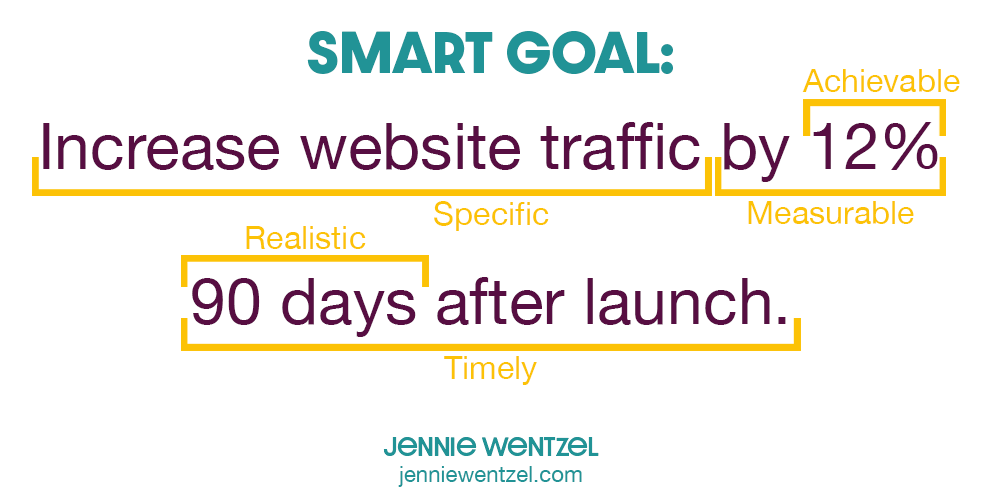
Most product launches focus on one specific goal, but you can have more than one. Just don’t go overboard!
Make Your Customer the Hero

Photo by Helloquence on Unsplash
A colleague of mine recently introduced me to StoryBrand Marketing, and it has honestly changed the way I develop campaign messaging ever since. It’s a paid workshop for marketers, but the basic premise is to make your customer the hero of your story. In step 2 you found out how you can HELP your customer solve THEIR problem. That’s the message you want to send!
Here is an example of a customer-focused message that I developed for one of my clients, a chiropractor in Grand Rapids, Michigan:
“Providing you with the tools to achieve total wellness.”
Think of your product as the guide that helps your customer (the hero) face a particular issue. This change in mindset better recognizes your customer’s journey to solve their problems, and ultimately creates more trust in your brand.
Develop Your Plan
You’ve got the information, the basic messaging, and the goals for success. The last step before launch is to plan your marketing campaign! What are the specific tactics and tools you will use to get the message about your product or service out there? Here are some ideas:
Email Newsletters
Social Media
Calling Campaign
Website Banner Ads
Website Blog Posts
Influencer Marketing
Event Marketing
Webinars
Where do your customers spend their time looking for information or solutions to their problems? These places are where you should focus your efforts. Set up a way to track the success of each platform or tactic you use. That way you will know for the next launch which tactics you need to invest more time and money into.
Execute the Launch
Congratulations! You’ve set yourself up for success by writing down a plan for your product launch. All that is left now is to execute your launch and monitor its success. Then, have another conversation with those prospects you spoke with in the beginning. Did your product or service solve their problem? What kind of feedback do they have for next time? Your loyal customers want to see you succeed. Ask them questions about how you can reach more people like them. They will be more than happy to help!
Are you preparing for a product launch? Download my free product launch checklist to walk you through your next big product launch today!
Hi! I’m Jennie.
Thank you for visiting my blog! I write about marketing tips for small businesses and how to succeed as a female professional. I write from experience about the things that I love.