
Let’s talk about something every small business owner loves: marketing that doesn’t cost a fortune.
Earned media isn’t a new concept, but it’s more valuable than ever right now, especially as traditional digital ads get more expensive and harder to ignore. If you’re working with a lean marketing budget, building an earned media strategy is one of the smartest places to put your energy.
What Is Earned Media?
Earned media is publicity you didn’t pay for and don’t own. It’s what happens when other people talk about your business (online or off) because they genuinely want to.
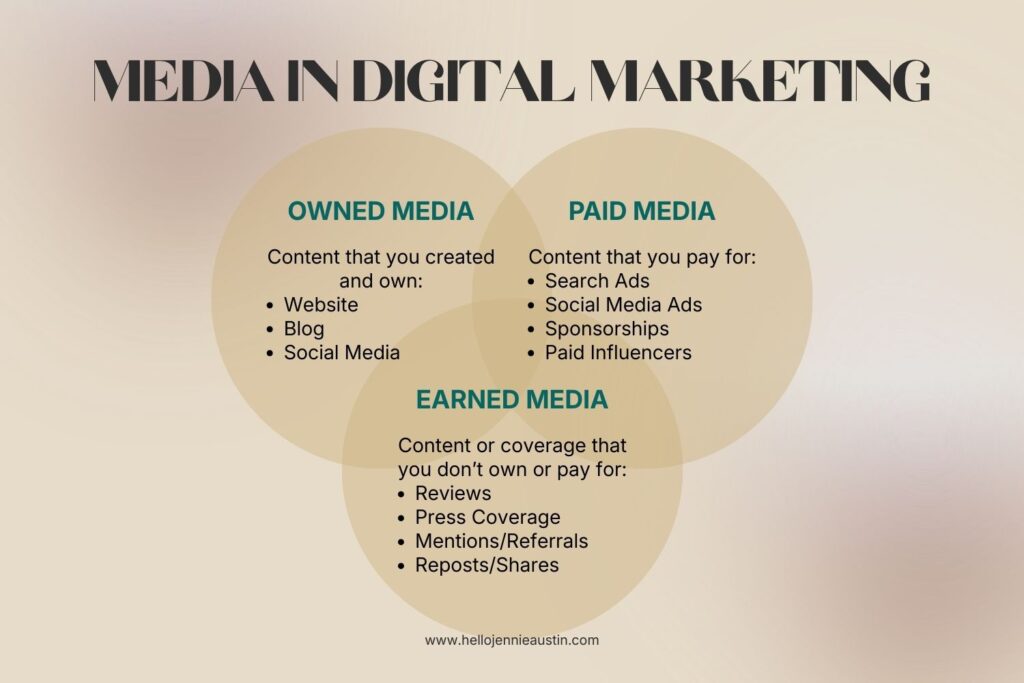
To put it in context, here’s how the three types of media break down:
- Owned media: your website, blog, email list, social profiles
- Paid media: ads, sponsored content, paid placements
- Earned media: everything else (reviews, press coverage, word of mouth, shares, mentions)
Some real-world examples:
- A customer has a great experience and leaves you a glowing Google review
- A local news outlet covers a donation or community initiative your business participated in
- Someone tags your business in an Instagram post after visiting
- A blogger or podcast features you as a resource in their niche
- An industry event invites you to speak on a panel
(And yes, a negative Yelp review is technically earned media too. Just not the kind we’re going for.)
Why Earned Media Matters More Than Ever
People Trust People More Than Brands
This isn’t new information, but the data keeps reinforcing it. Consumers are significantly more likely to trust information about a business that comes from friends, family, or strangers on the internet than from the business itself. Word of mouth (digital or otherwise) is still the most persuasive marketing channel out there.
Reviews are Now a Major SEO Signal
This is the piece that’s become dramatically more important in recent years and deserves its own spotlight. Google has made it increasingly clear that reviews (particularly Google Business Profile reviews) are a meaningful local SEO ranking factor. Businesses with more reviews, higher ratings, and recent review activity consistently rank higher in local search results and the Google Maps pack.
It goes beyond just quantity. The keywords people use in their reviews can actually help your business surface for relevant searches. If multiple customers mention “deep tissue massage in Mary Esther” or “best HydraFacial on the Emerald Coast” in their reviews, Google picks up on that. You’re essentially getting user-generated SEO content without writing a single word of it yourself.
And it’s not just Google. Reviews on Yelp, Facebook, TripAdvisor, and industry-specific platforms all contribute to how your business is perceived both by potential customers and by search engines crawling the web for signals about your credibility.
Audiences Tend to Tune Out Ads
Younger consumers especially have grown up surrounded by digital advertising and have developed a genuine immunity to it. Earned media feels organic and unforced, because it is. A customer shouting your praises on TikTok carries infinitely more weight with their audience than a paid ad saying the same thing.
How to Build Your Earned Media Strategy
1. Get Clear on Your Goal
What are you actually trying to accomplish? More local visibility? A stronger online reputation? Awareness with a new audience? Starting with a clear objective helps you figure out where to focus and what success looks like.
2. Understand Where Your Audience Pays Attention
An older local audience might rely heavily on Google reviews before making a decision. A younger demographic might trust peer recommendations on Instagram or TikTok. B2B customers probably read industry blogs and look for thought leadership. Meet your audience where they already are.
3. Make Reviews Part of the Process
This is the single highest-ROI earned media habit a small business can build. Most happy customers won’t leave a review unless you ask. Create a simple, repeatable system: follow up after a purchase or appointment with a direct link to your Google Business Profile and a genuine ask. The timing matters. Reach out while the experience is still fresh. Don’t incentivize reviews (it violates Google’s guidelines), but do make it easy and personal.
Respond to every review you receive, even the not-so-good ones. Responding to negative reviews publicly, calmly, and professionally signals to potential customers that you take your reputation seriously. It also signals to Google that your listing is active and managed.
4. Build Experiences Worth Talking About
This is the long game, and it’s where earned media strategy overlaps with just being a great business. Every customer touchpoint is an opportunity to create something worth sharing. What would make someone pull out their phone and post about you? What would make them tell a friend? Start there.
5. Connect with Your Community
Give back in ways that align with your mission. Participate in local events. Reach out to local press when you’re doing something genuinely newsworthy. These things take time, but the coverage and goodwill they generate have a long shelf life.
6. Make the Most of Every Opportunity
You don’t need a feature in a major publication to move the needle. A shoutout from a small local blogger, a mention in a community Facebook group, a tag from a micro-influencer… it all adds up. Engage with every customer who posts about you. Share your press mentions, however small. Build relationships with writers, community members, and brand advocates over time.
The Real Cost of Earned Media
Earned media isn’t 100% free. The cost is time and intentionality. But the customers you gain through these channels tend to be more engaged, more loyal, and more likely to refer others than customers who found you through a paid ad. And the SEO benefits, especially from a consistent stream of genuine reviews, compound over time in a way that paid traffic simply doesn’t.
Start building these habits now, and you’ll be glad you did.
Good ideas are just the beginning.
Let's make something real out of them together.
